
Introduction
Active Pharmaceutical Ingredients (APIs) are the essential components responsible for the therapeutic activity of pharmaceutical products. Developing an API is more than demonstrating that a chemical synthesis is possible in the laboratory. The development process must address reaction efficiency, impurity control, reproducibility, safety, scalability, analytical characterization, and manufacturing feasibility.
A well-designed API development strategy can help transform a laboratory synthesis into a robust and scalable manufacturing process.
From Laboratory Synthesis to Process Development
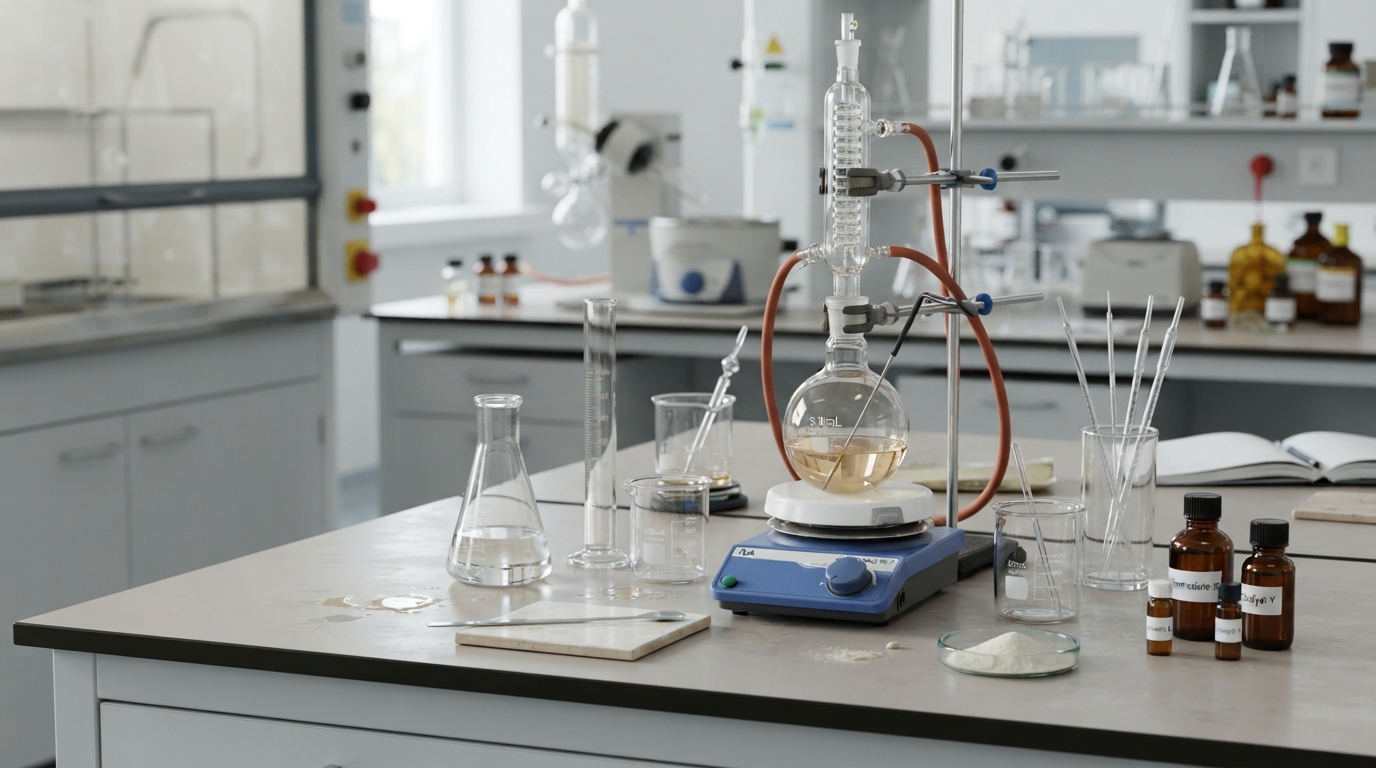
API development often begins with laboratory-scale synthetic research. At this stage, chemists investigate reaction pathways, starting materials, catalysts, solvents, reaction conditions, and purification strategies.
The initial objective is to establish a feasible synthetic route and understand the key chemical transformations involved.
However, a laboratory route may not automatically be suitable for larger-scale manufacturing. Factors such as reagent availability, reaction safety, solvent selection, impurity formation, isolation procedures, and process economics become increasingly important during process development.
Route Selection and Optimization
An effective API development program evaluates potential synthetic routes from both scientific and manufacturing perspectives.
Route selection may consider the number of synthetic steps, yield, selectivity, raw material availability, impurity profile, operational complexity, safety considerations, and scalability.
Once a suitable route has been identified, individual reaction steps can be optimized to improve yield, selectivity, reproducibility, and overall process performance.
Impurity Control and Analytical Characterization
Impurity control is a critical aspect of API development. Impurities may originate from starting materials, intermediates, side reactions, degradation pathways, reagents, catalysts, or the manufacturing process itself.
Analytical methods such as HPLC, GC, NMR, FTIR, and other appropriate techniques can support characterization and monitoring of the API and related substances.
Understanding the origin and behavior of impurities can help establish appropriate process controls and purification strategies.
Scale-Up Considerations
Scale-up introduces new technical challenges because laboratory conditions may not translate directly to larger equipment.
Parameters such as mixing, heat transfer, mass transfer, reaction kinetics, addition rates, agitation, crystallization, filtration, and drying may behave differently at larger scale.
Consequently, scale-up should be supported by process understanding and appropriate experimentation.
Toward Manufacturing
The ultimate objective of API process development is to establish a process that can consistently produce material meeting predefined quality requirements.
Development data should support manufacturing instructions, specifications, analytical controls, process understanding, and technology transfer.
The transition from laboratory synthesis to manufacturing therefore requires close integration between chemistry, analytical development, process engineering, quality, and regulatory considerations.
Conclusion
API development connects synthetic chemistry with pharmaceutical manufacturing. A successful development program moves beyond laboratory yield and focuses on process robustness, impurity control, scalability, safety, analytical characterization, and reproducibility.
By systematically optimizing the synthetic route and understanding critical process parameters, pharmaceutical developers can establish a stronger foundation for scale-up and commercial manufacturing.